
 Image 1 of 3
 Image 2 of 3
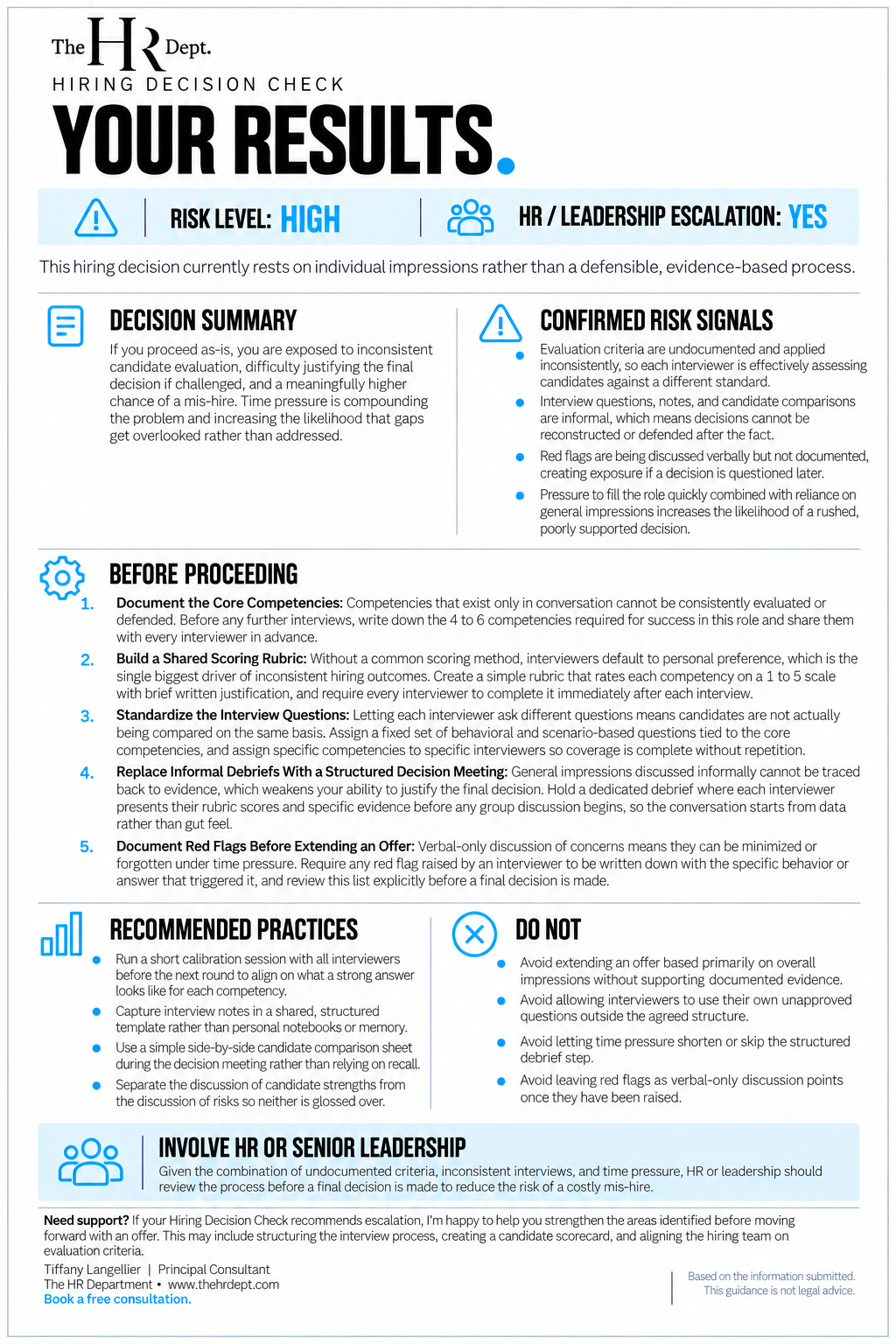 Image 3 of 3
What it Does
The Hiring Decision Check is designed to help business leaders make informed, defensible hiring decisions before extending an offer.
This tool evaluates whether the role, candidate, and hiring process are aligned with business needs and organizational capacity. It is intended to surface hidden risks that often lead to mis-hires, internal disruption, or early turnover.
Through a structured assessment, this tool helps you:
Identify hiring risks before finalizing a decision
Validate that the role is clearly defined and necessary
Evaluate whether the selected candidate is the right fit based on objective criteria
Surface gaps in compensation, internal equity, or leveling
Assess whether your organization is prepared to successfully onboard and support the hire
Reduce exposure to compliance risks and inconsistent hiring practices
This tool provides strategic guidance and decision support. It does not constitute legal advice.
What this Tool Evaluates
Whether the role is clearly defined
Whether the candidate was objectively selected
Whether compensation is aligned and equitable
Whether the hiring process was consistent and compliant
Whether the organization is prepared to support the hire
Whether any risk signals suggest this may be a reactive or misaligned decision
How it Works
The Hiring Decision Check is a quick, structured assessment designed to evaluate the strength of your hiring decision before extending an offer. You’ll respond to a series of targeted questions about the role, candidate, compensation, and hiring process.
Your answers are analyzed across key risk areas, including:
Role clarity and business need
Candidate evaluation
Compensation and internal equity
Hiring process consistency
Organizational readiness
The tool will look for gaps, inconsistencies, and potential red flags that could lead to a mis-hire.
The Hiring Decision Check provides a clear, objective assessment of whether you’re ready to move forward with your hire or setting yourself up for a costly mistake.
Why HRIS Does not Do This
Because HRIS systems weren’t built to think, they were built to track.